
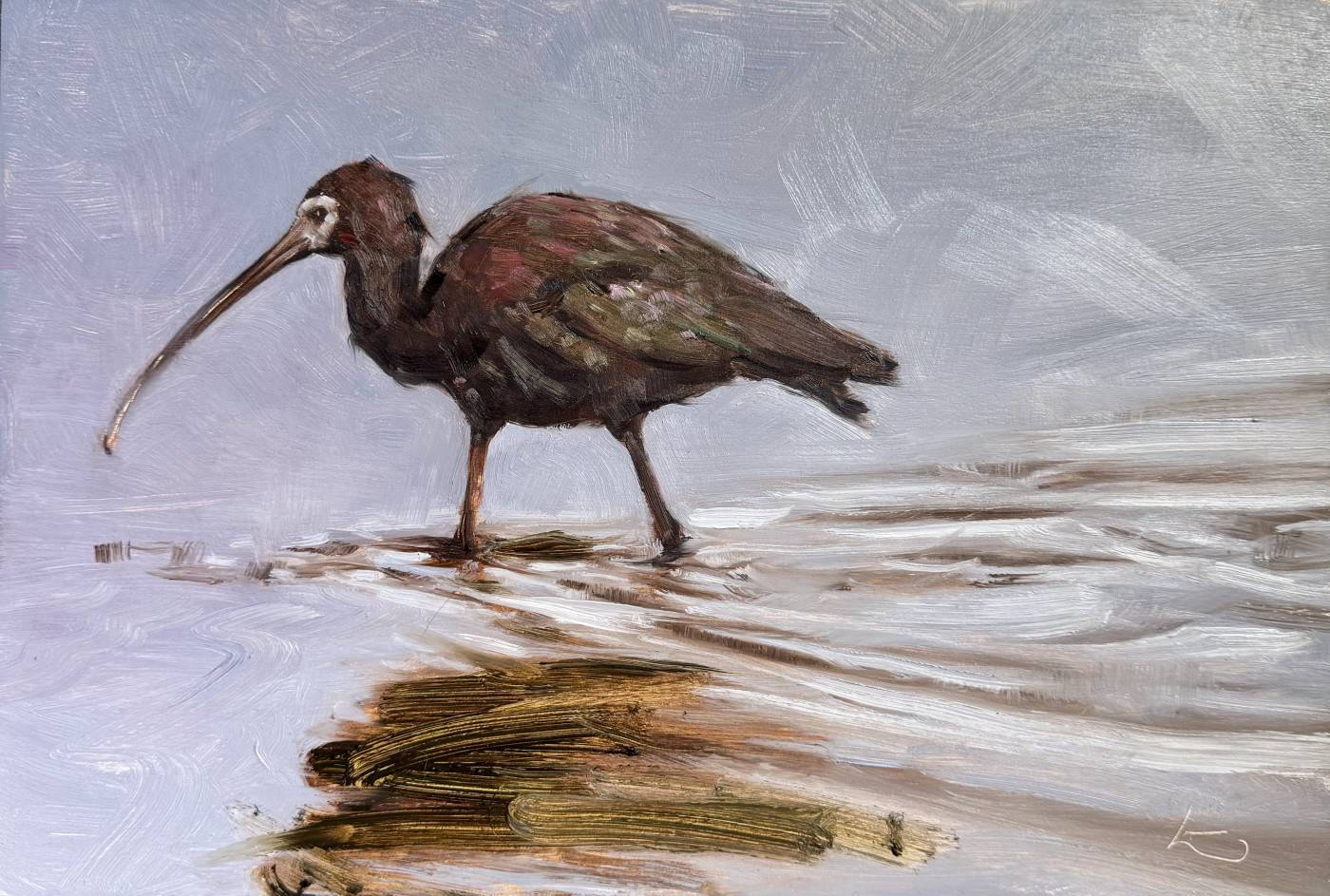
Erik Linton has spent a year painting images of the lake. He will share highlights Sept. 15 at 7 p.m.
Editor's note: This article is published through the Great Salt Lake Collaborative with funding from Love the Lake, an initiative of the nonprofit Great Salt Lake Alliance. Editorial decisions are made independently by the Collaborative and partner newsrooms
Erik Linton is a painter, father, and staunch advocate for the preservation of Utah’s unparalleled landscape at the Great Salt Lake. He’s spending a year painting images of the struggling lake. Dust storms or not, he treks to the lake’s shores at least once a week with his five children in tow. Whether it be the mirabilite salt mounds of the Great Salt Lake Marina or the annual flocking of migratory birds to the freshwater wetlands of the river inflow deltas, Linton is there capturing it on canvas.
I interviewed Linton, who shared what it’s like to be, in his words, perhaps one of the last generations of artists privileged enough to celebrate the grandeur of the Great Salt Lake. He has set out on a year-long en plein air (outdoor painting) venture documenting not just the lake, but its pervasiveness throughout Utah’s culture.
Sign up here to hear from Erik Linton about his year painting the lake.
The following are excerpts from the interview, edited and condensed for clarity.
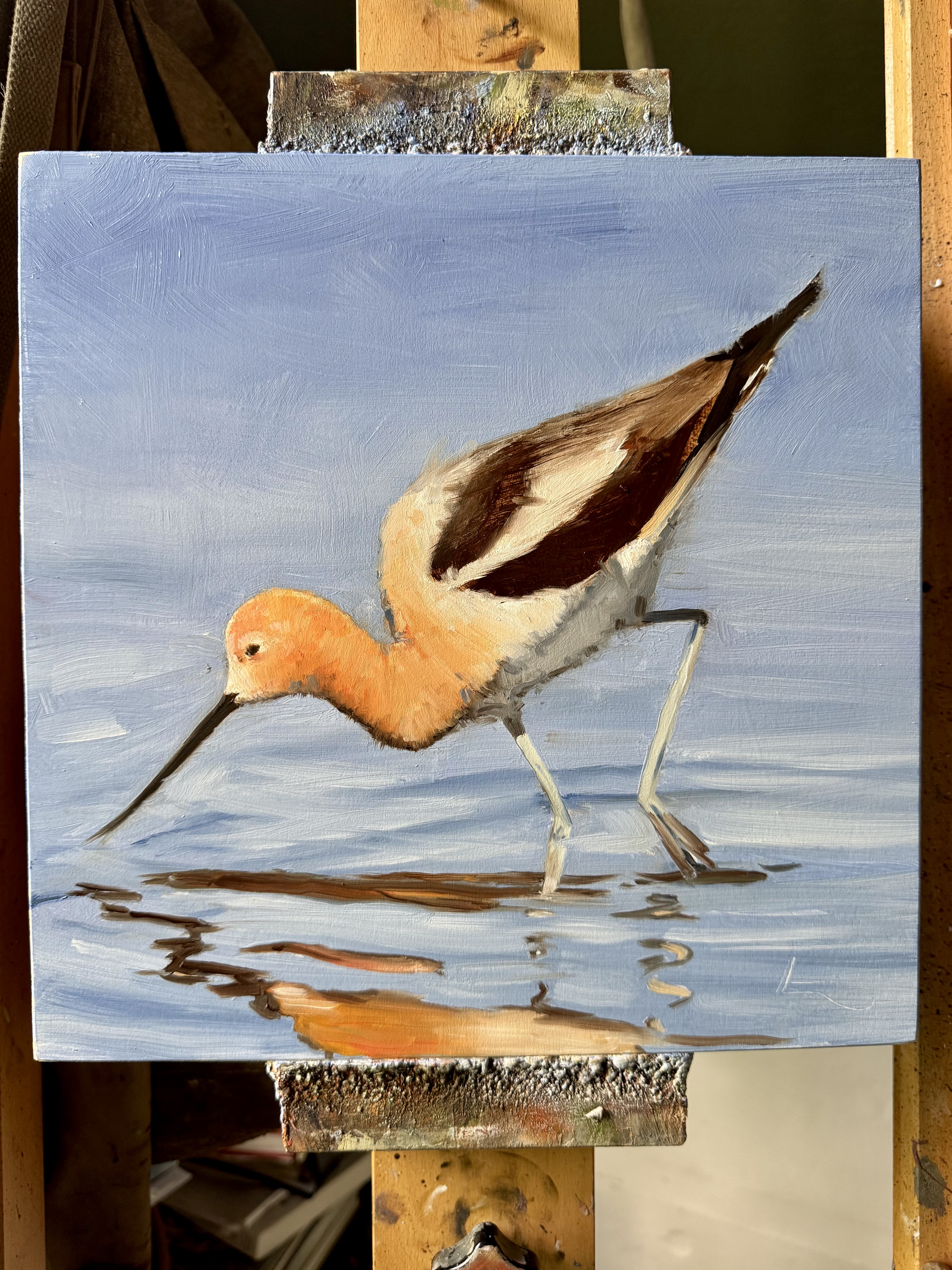
(Courtesy Erik Linton) The artist Erik Linton has spent a year painting the Great Salt Lake.
Q: How has your relationship with the Great Salt Lake changed as you’ve begun studying it through an artist’s lens?
Linton: It’s definitely more intense and in-depth. I would say when you’re approaching things as an artist, you’re looking for things that you might overlook normally– that you might not notice or you might walk past– and now I’m there with my eyes and senses kind of wide-open… there’s so many colors and animals and insects that I hadn’t noticed before. And so, dust storms and all, I’ll be going out there. It’s made me realize overall how vast it is, that it’s not this homogenous environment. It has so many different environments and microecosystems, and I’ve learned a lot about how one system interacts with another, and how the lake interacts so much with the broader ecosystems. Nothing about the lake is an island. It’s not isolated from anything else. It’s affecting such a huge geographic and ecological area, and it’s made up of so many different parts. That’s kind of what I’ve noticed a lot more as an artist— all those little parts that are involved.
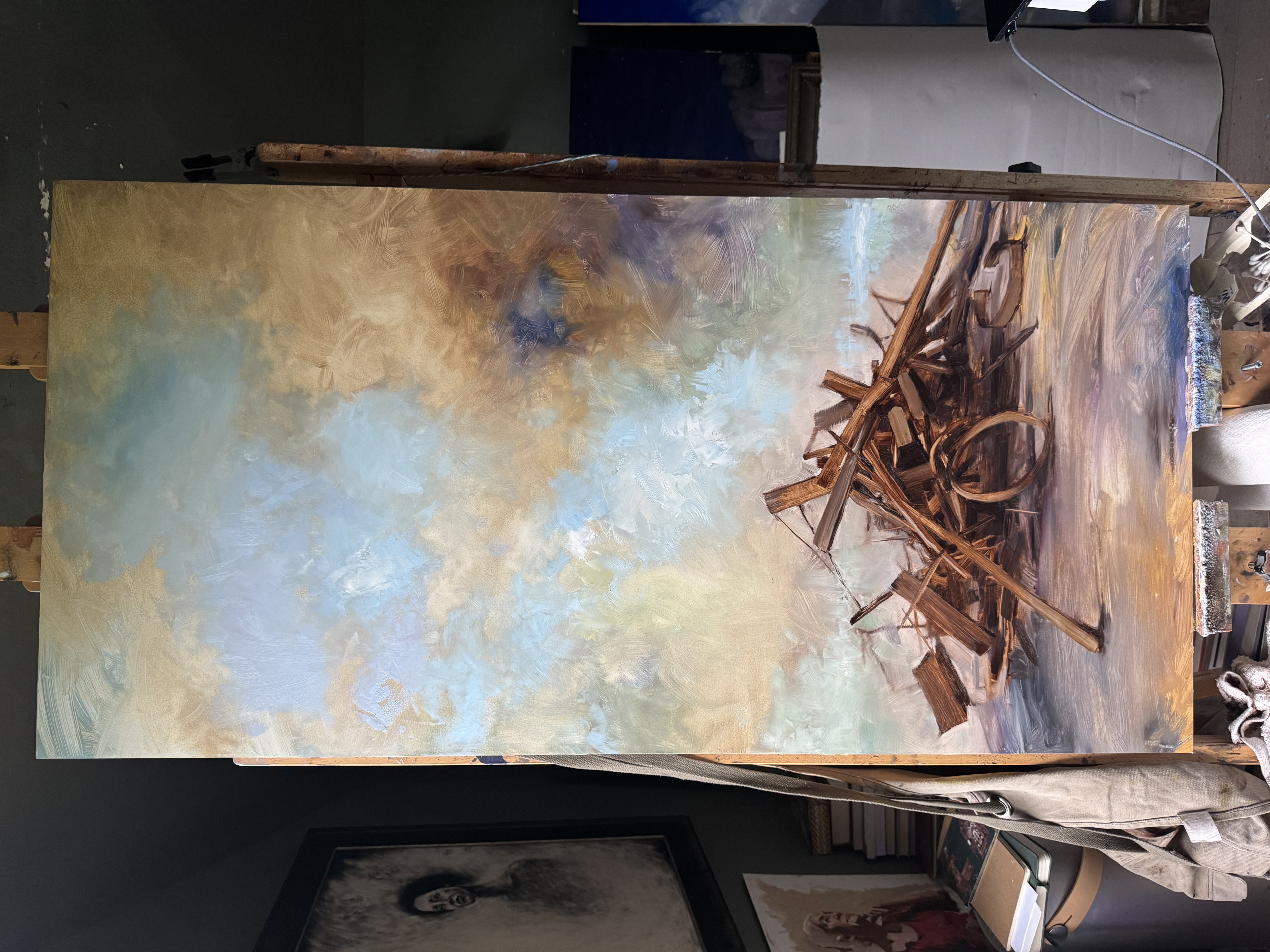
(Courtesy Erik Linton) The artist Erik Linton has spent a year painting the Great Salt Lake.
Q: What memories have you made with your children while exploring the Great Salt Lake? Are you concerned that their recollections of the lake may be some of the last physical memories to exist?
Linton: I’ve taken them out to see the brine flies, which normally would be a gross experience for a lot of people, but it was really fun to explain the important role that the brine flies play in this ecosystem. I explained that these are in the water for so long, and then they finally bubble up to the surface of the water and leave their husks behind on the beach. They walked through the brine flies and it created this ripple of flies that would go out from around them… it was just this magical moment where they could see they weren’t just interacting with flies, they were interacting with this critical part of the Great Salt Lake.
I am really worried that these will be things they look back on when it’s no longer there. That they might tell their children and grandchildren about the brine flies. And if the lake is too saline, those won’t exist. All the birds that we’ve interacted with out there won’t have that source of food… within our lifetimes the lake could be gone. I also think about my own childhood, because I remember going out there. I was born at the peak of the Great Salt Lake high water mark, in 1984. And now I’ve seen the lowest point of the Great Salt Lake. To see such a drastic contrast in my lifetime alone… it’s not hard to imagine that in their lifetime they’ll see possibly the collapse of the Great Salt Lake.
Q: What kinds of artistic liberties do you take when painting your subjects? How do you add a personal touch to these works of realism?
Linton: That’s what makes it fun to paint as opposed to photographing; that it’s kind of going through my own interpretation. A lot of times I will take liberties to sometimes capture the way that things feel and not just how they look visually. I think of the wind and dust that I’m dealing with a lot, and it’s not always easy to see, and I want to show that in my paintings. So to some of my paintings in the sky I’ve added texture and colors that accentuate all the things that are in the air. You have the cobalt blue of the sky, but then you also have these muddy, brownish, cloudy textures and colors in the sky. For me it kind of captures not just the visual aspect of it but how it feels being out there and feeling things in the air, feeling the wind and dust on your face.
Q: What emotions do you want your audience to experience when viewing your work?
Linton: I want to share the sadness that I see… but I also want people to see the utter beauty of these oases of life that still exist out there– there are still springs that are host to so many different types of animals and insects… so I want people to experience the awe of the vastness of this environment, and a little bit of that fear and responsibility that this is a human-caused issue and we should feel a bit of sadness for it. But if there’s anything underlining it, I want it to be that this land, no matter what state it’s in, has value, and we should love it, even if it isn’t our stereotypical idea of beauty.
Q: What would you like viewers to do about the lake?
Linton: Get involved in learning about the lake and the political issues and the decisions that are being made about the lake, and have courage to reach out to those decision-makers and share your opinion. Because it’s not too late to save the lake. There is enough water, even with the driest winter that we’ve ever had. But it does take monumental efforts, and no saline terminal-basin lake has been saved yet. Hopefully we can be the first. If every politician, and every decision-maker and powerful business owner in Utah knows that Utahns care about this region enough to put their money where their mouth is and enough to speak up and message their representatives, I think that honestly, as simple as it sounds, it could make that difference. As an artist, I want my emotional connection to lead people to action.