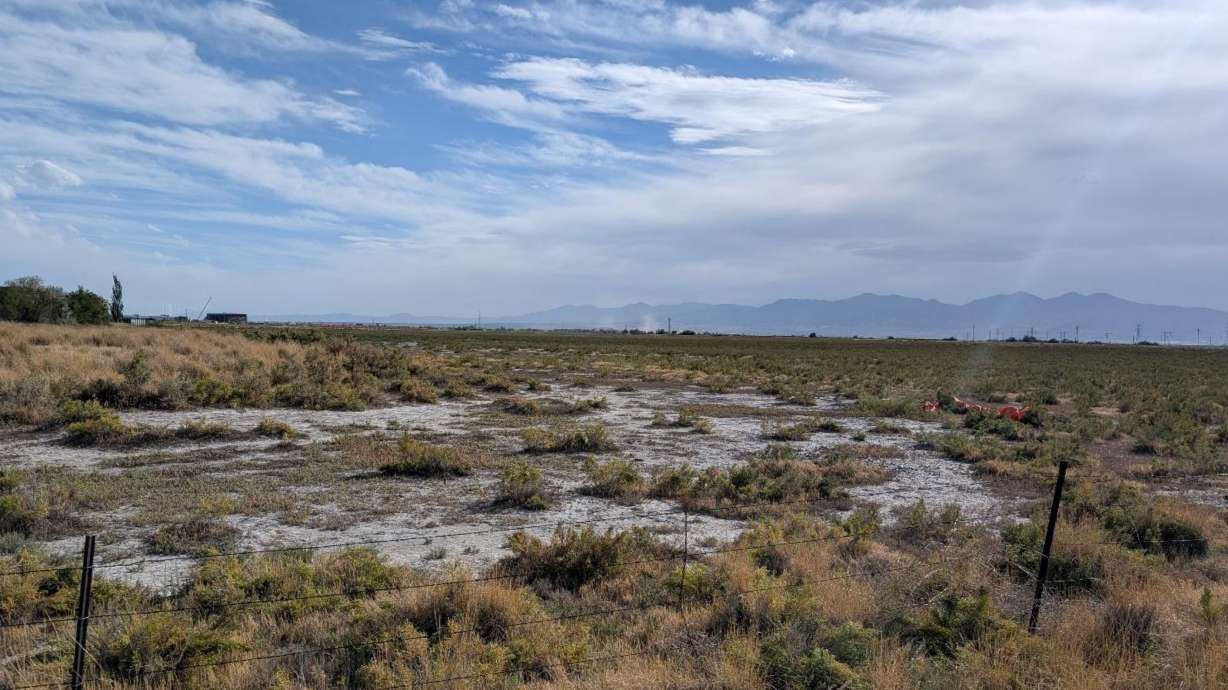
SALT LAKE CITY — A plan to turn some of the last remaining agricultural land in northwest Salt Lake City into light industrial space failed to receive a key recommendation on Wednesday.
While that doesn't outright halt the plan, proposed by one of the state's more prominent developers, it was a small victory for the residents and conservation groups who packed the meeting, seeking to preserve the Great Salt Lake's declining wetlands.
The Salt Lake City Planning Commission voted unanimously to issue an unfavorable recommendation on the plan to rezone an 80-acre parcel at approximately 2669 W. 3300 North in the city's Northpoint area from agricultural to M1-A, a light manufacturing zone designated for the area. Members cited the project's incompatibility with the city-approved 2023 area master plan as the basis for their decision.
Some of the plan's opponents raised their arms in celebration when the final vote was made.
"The planning commissioners clearly recognize the issue," said Deeda Seed, a senior campaigner for the Center for Biological Diversity, after the meeting. "This is a good sign that they recognize there are lots of unanswered questions here."
What's being proposed
The parcel is owned by the Clark and Christine Ivory Foundation, a nonprofit founded by the CEO of Ivory Homes and his wife to address education and housing affordability. They're seeking to turn old grazing farmland into a development "at a size and scale similar to that of nearby industrial uses," according to a city document.
"This property was bought by the foundation almost five years ago with the intent that profits from the development would, in fact, go to scholarships, affordable housing, homelessness and other basic needs," said Scott Bates, a representative for the foundation, during the meeting.
It was among parcels annexed into the city last year, falling into the city's Northpoint Small Area Plan. Salt Lake City adopted the plan in 2023 to sort out the growth in the area spurred by the construction of large warehouses and the impact it has had on residents and the land.
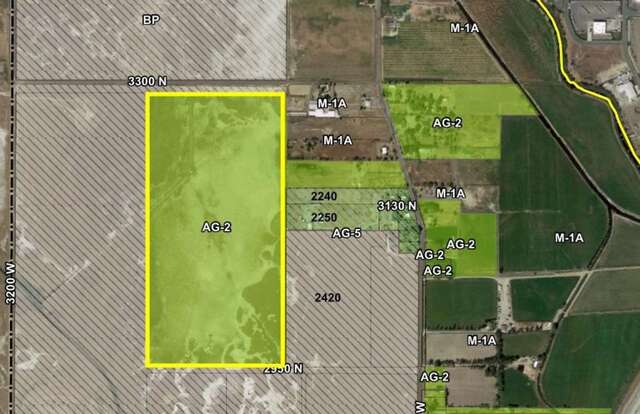
This map shows where the 80-acre parcel that the Clark and Christine Ivory Foundation owns. The foundation is seeking to rezone the space from agricultural to light industrial. (Photo: Salt Lake City Planning Division)
The site is essentially a "doughnut hole," surrounded by land owned by Scannell Logistics, zoned as a business park, Bates added.
Salt Lake City planners recommended the rezoning proposal and change to the plan, as long as a development agreement is included to ensure community benefits and a wetlands delineation study — something that was already completed — is performed before development, among other things.
M1-A includes language to protect "sensitive shorelands" while allowing for some light industrial, research and office uses, unlike the business park zoning, they added.
A fight against it
However, conservation groups and others argued it's not enough to replace the harm that the project would have on the wetlands.
The parcel is located near "prime habitat" for many bird and other wildlife species, said Heather Dove, former president of the Great Salt Lake Audubon. She added that all of the wetlands remain hydrologically connected to the Great Salt Lake, despite the lake's shrinkage and development in the area, which is why it's still important.
"Every wetland destroyed from here on in will result in another nail in the coffin," she said. "Once these wetlands and playas are destroyed, they will be gone forever."
Every new development introduces more air pollution and other consequential environmental challenges, said Brian Moench, president of Utah Physicians for a Healthy Environment. While he said 80 acres may seem small in the grand scheme of things, these types of rezoning requests are picking up, and it can create "death by a thousand cuts."
Not everyone opposed the proposal, though.
Wildlife has virtually left the area since the vast development of warehouses in the area, said Alma Mendoza, who said she maintains one of Northpoint's last remaining farmlands. By this point, she and many of her neighbors are ready to rezone as developments continue to move into the neighborhood.
"It's being really developed by a lot of warehouses, and it's just time for a change and time for us to move on," she told the commission.
There's indeed tremendous pressure from developers seeking to scoop up land, but deer, cranes and other wildlife still live in the area — for now, said Allison Musser, who also lives near the parcel. There are plans for roads and new buildings that could change it, but not all of that has materialized yet.
She showed up to oppose the measure, saying it contradicts previous city efforts to preserve wetlands in the 2023 plan.
The next steps
Members of the commission ultimately sided with the group, voting to issue unfavorable recommendations on both the rezone and an amendment to the area master plan.
"What are we doing here? Like, this isn't in line with ... the existing plan," said commission member Lilah Rosenfield, before the vote. "The community loudly opposed. I'm not sure I see a case for this. It should stay as it is."
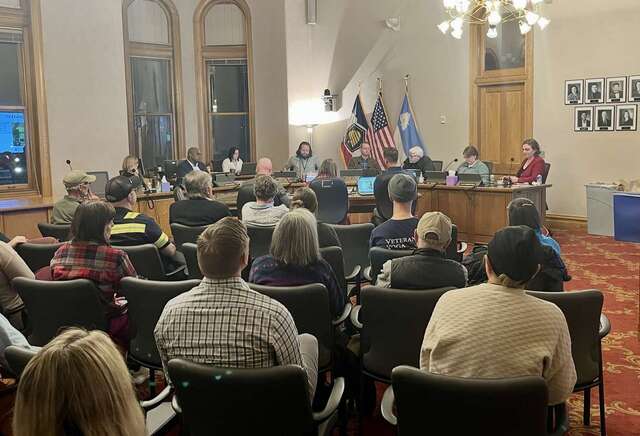
Members of the Salt Lake City Planning Commission vote to send an unfavorable recommendation for a plan to rezone 80 acres of agricultural land to light industrial space during a meeting at the Salt Lake City-County Building on Wednesday. (Photo: Carter Williams, KSL)
Others agreed, pointing to inconsistencies with what the city adopted in 2023.
Bates, with the Ivory foundation, declined KSL's request for comment on the decision after the meeting, but it's ultimately up to the Salt Lake City Council to make a final decision. It's unclear when it will take up that discussion.
Those who pushed against the rezoning effort say they're optimistic that Wednesday's recommendation can carry over into the final decision.
"You've got to be hopeful it's going to happen," Musser told KSL. "It was a great win today."