

Wildlife biologist Christian Edwards navigates dense riparian vegetation in Washington County, crawling through overhanging willows and wading through muddy terrain. Endangered birds live in the thicket, and he's listening for their hallmark "fitz-bew" call.
Edwards was seeking Southwestern Willow flycatchers, a federally endangered bird found across the American Southwest, as part of an ongoing survey effort by the Utah Division of Wildlife Resources.
Risks to flycatchers include habitat loss and degradation, and the parasitic behavior of brown-headed cowbirds, which remove eggs from flycatcher nests to lay their own. Edwards said cowbirds typically hatch earlier and grow more quickly, outcompeting flycatchers and causing additional nestling deaths.
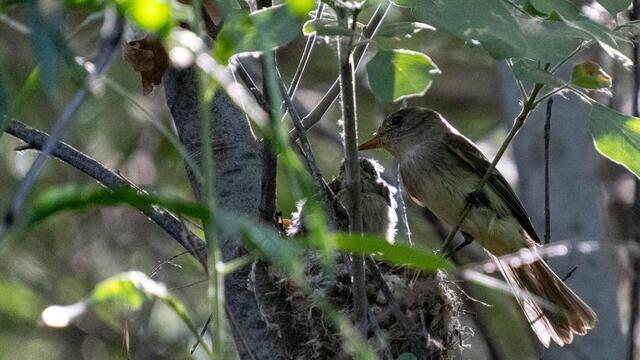
A Southwestern willow flycatcher tends to its nest, Washington County, Utah, July 2, 2026. (Photo by Alysha Lundgren, St. George News)
According to the National Park Service, the species spends the breeding season in Southern Utah, Southern California, Southern Nevada, Southwestern Colorado, Arizona and New Mexico. In cooler months, they travel south to Central America and the northern reaches of South America.
"They show up along the Virgin River in St. George around May, and they're out of here by the first week of August, back to the migratory grounds," Edwards said. "There's only approximately 1,300 territories of this species, and it's across the Southwest. So, they show up here — they like to nest in dense riparian forest and areas on the Virgin River provide that for them."
Edwards said the division conducts two types of surveys for willow flycatchers. First, they conduct U.S. Fish and Wildlife presence-absence surveys, in which they listen for male flycatchers. If they don't hear him singing, they use speakers to broadcast flycatcher songs and calls at sites where biologists think the birds occur, and wait for a response.
"That way we know if there's breeding flycatchers in this area," he said.
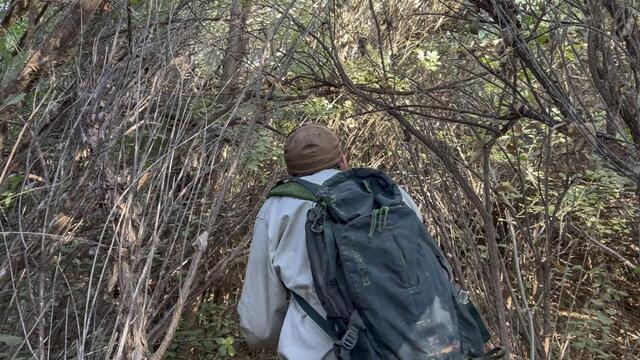
Wildlife Biologist Christian Edwards searches for Southwestern willow flycatchers, Washington County, Utah, July 2, 2026. (Photo by Alysha Lundgren, St. George News)
The second type of survey involves monitoring nests, ascertaining how many eggs were laid, how many hatched and how many nestlings successfully left the nest. The division visits about 10 sites along the Virgin River and a few on the Santa Clara River. Biologists conduct surveys between May and August.
Data from the surveys gives biologists an idea of how many birds are in the area, where they are and how they're doing.
"That gives us an idea of basic trends — population trends of flycatchers along the Virgin River," Edwards said, adding, "The data that we collect will assist in recovery actions on creating habitat that they prefer. So we do habitat restoration efforts, where we preserve habitat and also try to enhance the habitat that they like, which is usually a mix of tamarisk, and native willow and cottonwood and ash trees."
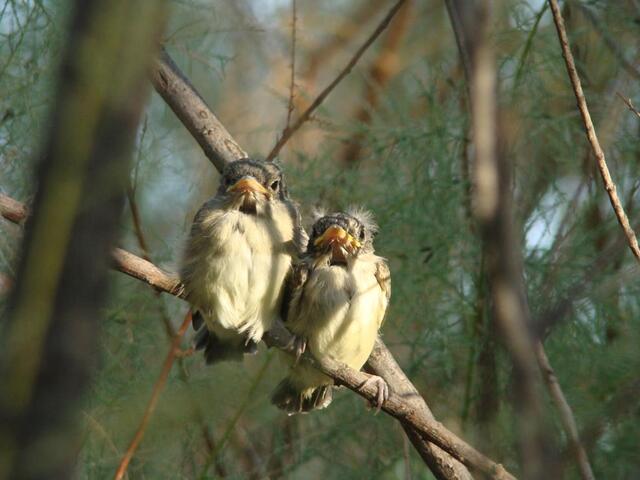
Fledgling Southwestern willow flycatchers perch, location and date not specified. (Photo courtesy of the Utah Division of Wildlife Resources)
St. George News previously reported that the species appeared to prefer invasive tamarisk trees, which Edwards said is still true, with the birds still selecting tamarisk overall. The trees are thick and structurally complex, making them ideal for hiding nests.
"But, actually, over the last couple of years, we've seen the flycatchers move into more native-dominated habitats," he said, adding, "Over the last two or three years, we've seen them using native species more than tamarisk, which — wasn't really expecting that."
This trend is a positive for various groups as "everyone wants to get rid of tamarisk," Edwards said.
"Tamarisk can be a fire threat," he said. "You know, it's a non-native species. And so I've always been kind of like, 'Let's leave some of … these tamarisk areas alone, because the flycatchers prefer to nest in those.' But I would say it's a good shift because it puts less pressure on trying to keep tamarisk in the mix for the birds. You know, we can make different groups happier if we say, 'OK, let's remove some tamarisk.'"
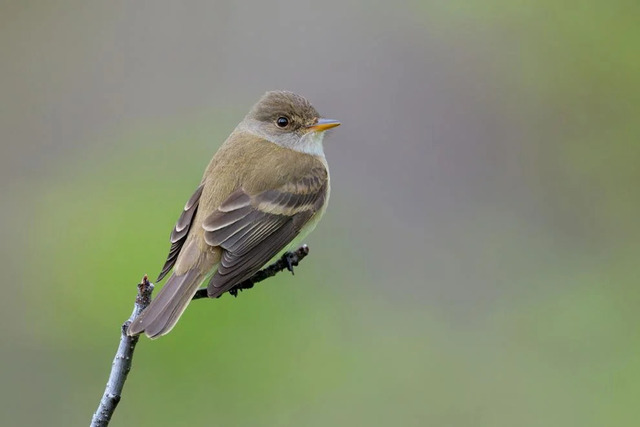
A Southwestern willow flycatcher perches, location and date not specified. (Photo courtesy of the Utah Division of Wildlife Resources)
The division is still completing surveys, so results are not yet available. However, Edwards said they've observed 10 nesting pairs, which is "probably average."
"Sometimes we get as few as eight male flycatchers, as many as 12 or 13, but the average is about 10," he said. "And that's where we are. So, holding steady."
Edwards said the population appears to be relatively stable, which he attributes to a collaborative effort by the division, Washington County, the Washington County Water Conservancy District and others.
"Just working together under the Virgin River Program has allowed a lot of successful actions to take place, such as habitat restoration work and acquiring land and things like that," he said.
Additional Photos
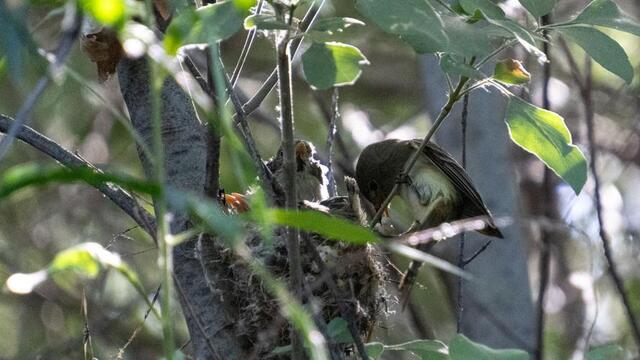
A Southwestern willow flycatcher tends to its nest, Washington County, Utah, July 2, 2026. (Photo by Alysha Lundgren, St. George News)
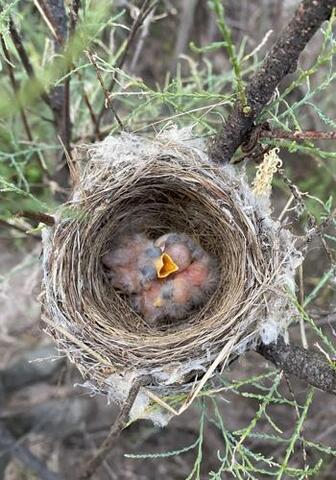
Nestling Southwestern willow flycatchers sit in a nest, location and date not specified. (Photo courtesy of the Utah Division of Wildlife Resources)
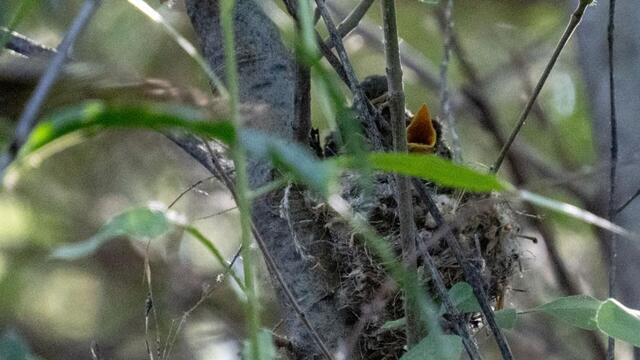
Three young Southwestern willow flycatchers chirp in their nest, Washington County, Utah, July 2, 2026. (Photo by Alysha Lundgren, St. George News)
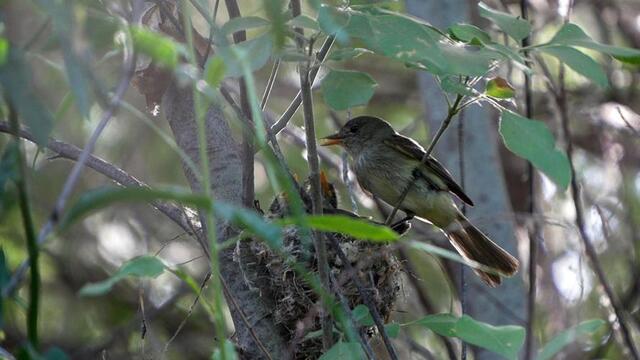
A Southwestern willow flycatcher tends to its nest, Washington County, Utah, July 2, 2026. (Photo by Alysha Lundgren, St. George News)
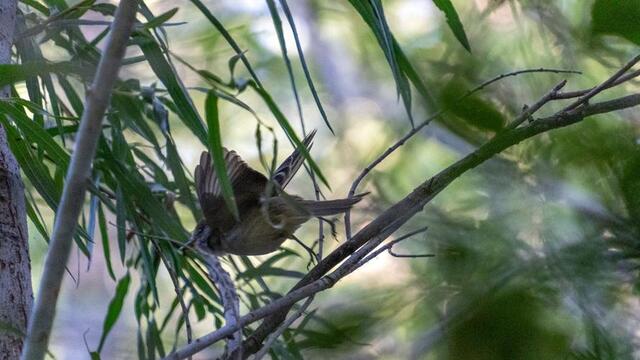
A Southwestern willow flycatcher flies from its nest, Washington County, Utah, July 2, 2026. (Photo by Alysha Lundgren, St. George News)
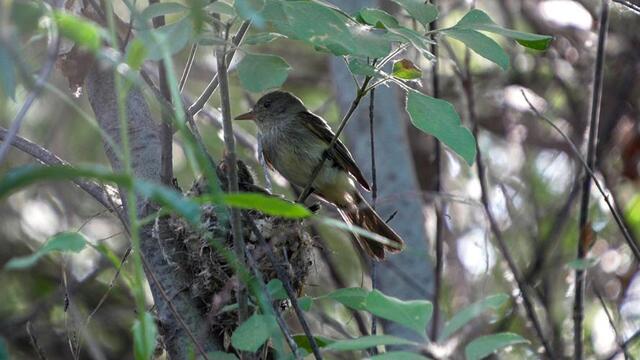
A Southwestern willow flycatcher tends to its nest, Washington County, Utah, July 2, 2026. (Photo by Alysha Lundgren, St. George News)
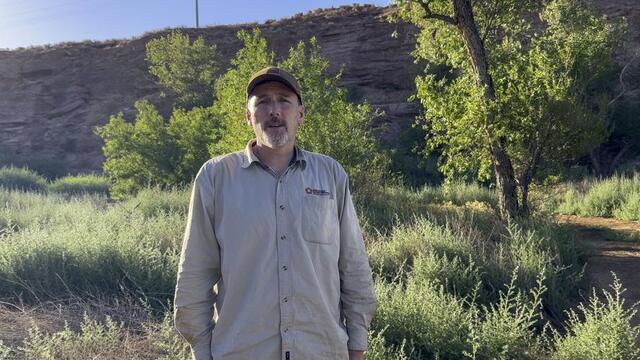
Wildlife Biologist Christian Edwards talks about Southwestern willow flycatchers, Washington County, Utah, July 2, 2026. (Photo by Alysha Lundgren, St. George News)

Southwestern willow flycatcher eggs are seen in a nest, location and date not specified. (Photo courtesy of the Utah Division of Wildlife Resources)
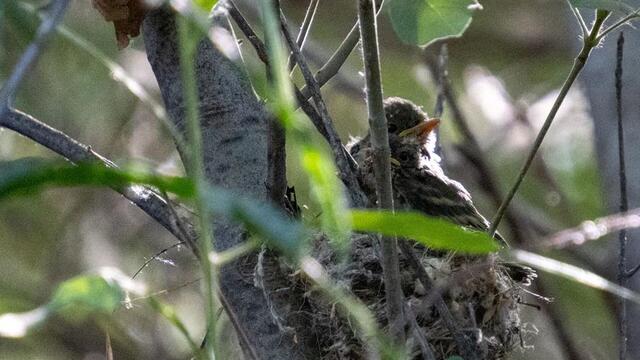
Three young Southwestern willow flycatchers sit in their nest, Washington County, Utah, July 2, 2026. (Photo by Alysha Lundgren, St. George News)
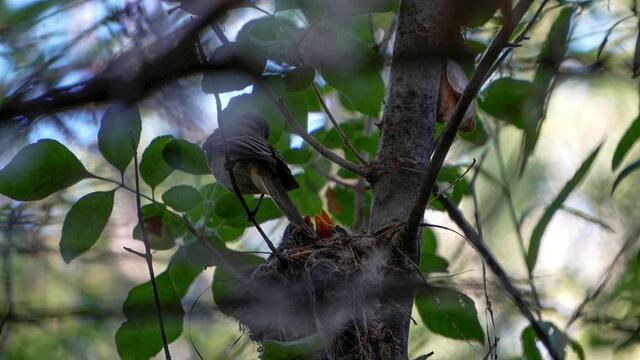
A Southwestern willow flycatcher tends to its nest, Washington County, Utah, July 2, 2026. (Photo by Alysha Lundgren, St. George News)
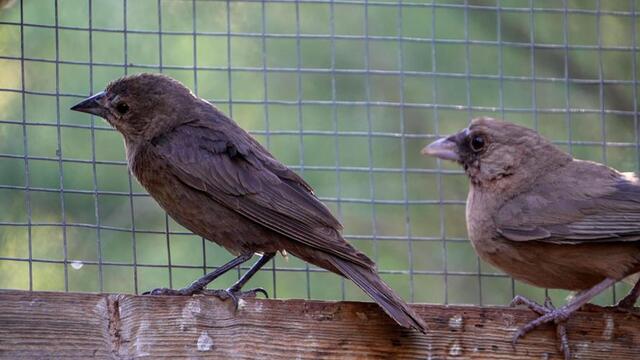
A brown-headed cowbird is caught in a trap with several Abert's towhees, Washington County, Utah, July 2, 2026. (Photo by Alysha Lundgren, St. George News)
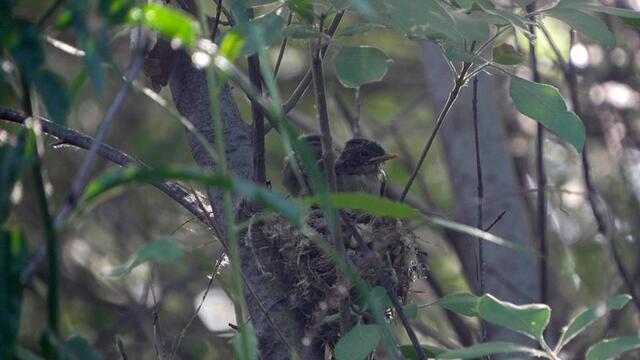
A Southwestern willow flycatcher tends to its nest, Washington County, Utah, July 2, 2026. (Photo by Alysha Lundgren, St. George News)