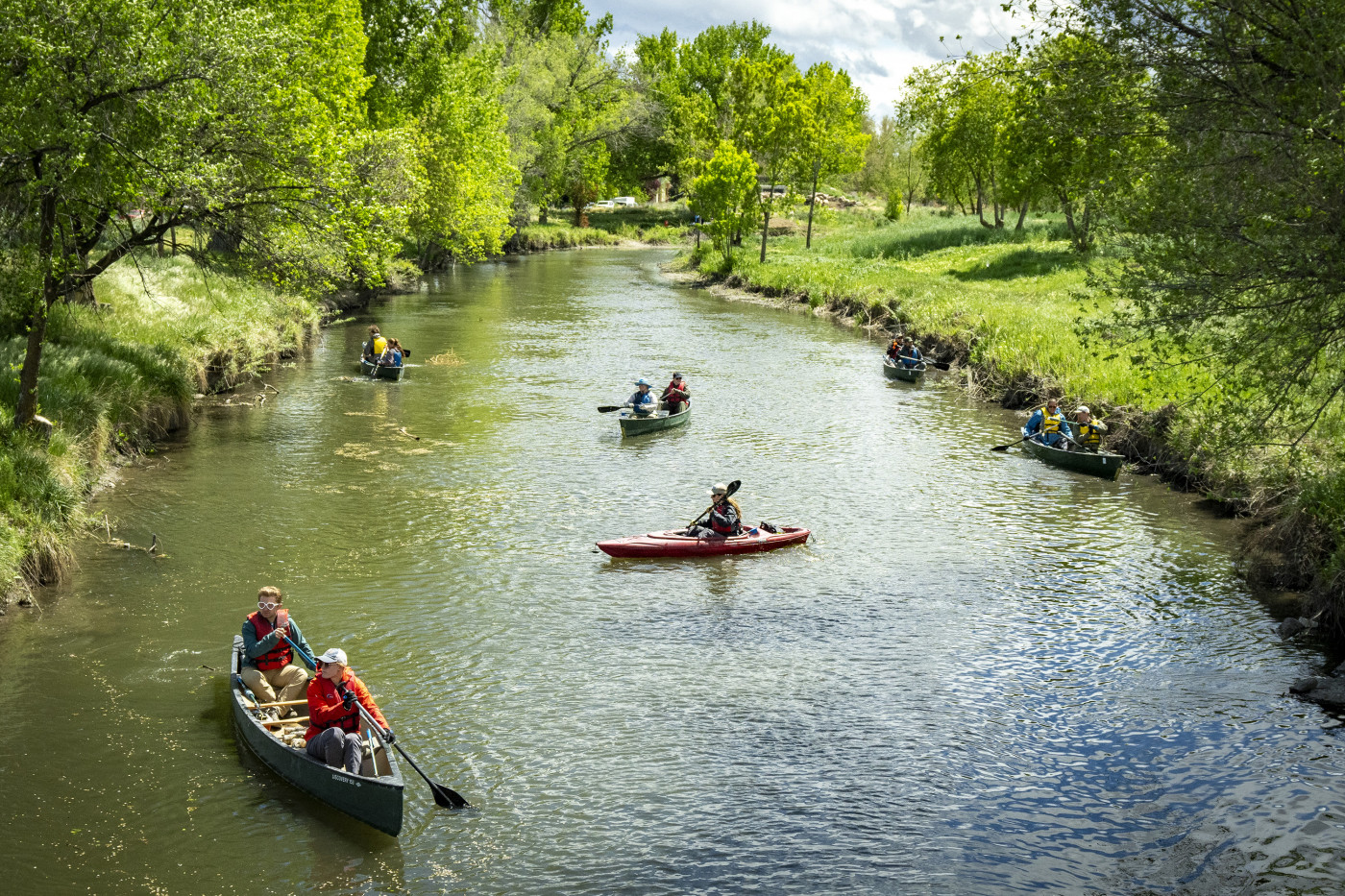
Residents have mixed feelings about the 51 mile-long waterway that connects Utah Lake to the Great Salt Lake.
Note to readers • This article is published through the Great Salt Lake Collaborative with support from the Jordan River Commission. Editorial decisions are made independently by the Collaborative and partner newsrooms.
Dirty, smelly water. Precious wildlife in a fragile urban oasis. Safety concerns, untapped recreation potential, land mismanagement — and one ghost.
That’s how 61 Utahns described the Jordan River in a short answer, open response survey by the Great Salt Lake Collaborative.
As the river gains more attention — including years of restoration completed, more work underway and billions of dollars committed to the watershed — we wanted to know: How do Utahns actually feel about the Jordan River?
“It’s better than it once was, but lots of room to improve,” Ryan Hinkins, who packrafts the river, said in the survey.
“The further north you go, the more garbage and homeless encampments there are,” Amy Brunvand from Salt Lake City said. “When I tell people I like to float the Jordan they inevitably say ‘what about the dead bodies?’”
“It's a jewel, water in the desert! Should be treated as such, cleaned up, and preserved for all to enjoy,” Matt Monson, also from Salt Lake City, added.
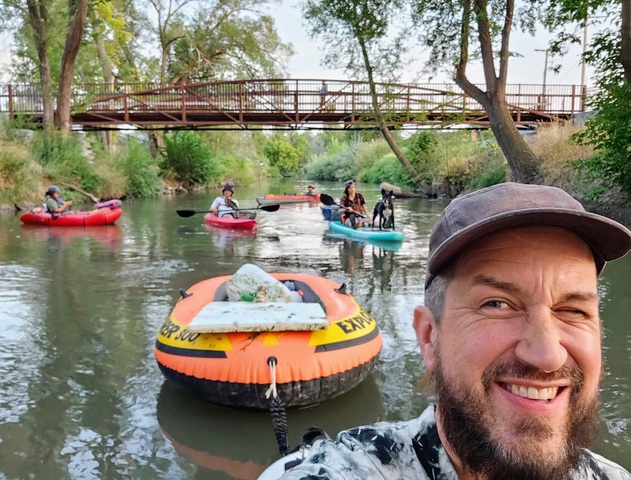
(Photo courtesy Matt Monson) Matt Monson and friends participate in a Jordan River cleanup during in 2025.
While perspectives varied, a common theme emerged: many Utahns see the Jordan River as a resourceful asset, one with high potential, but one with difficult challenges that must be addressed.
Safety discrepancies and homelessness
We asked Utahns to share their hopes for the future of the Jordan River and trail. Three commonalities emerged: environmental cleanup, preserving nature, and developing better common space.
“Clean the river, remove the unhoused, provide services, and [allocate] the funds to patrol the path daily,” Jeremiah Rogers, a Salt Lake City resident who spends time at Cottonwood Park, said. “Have the police presence necessary to prohibit illegal camping and crime.”
The Jordan River corridor is no stranger to Utah’s growing homelessness rate, which increased by 18% in 2025. Some respondents expressed safety concerns due to the presence of unsheltered people. Others felt differently.
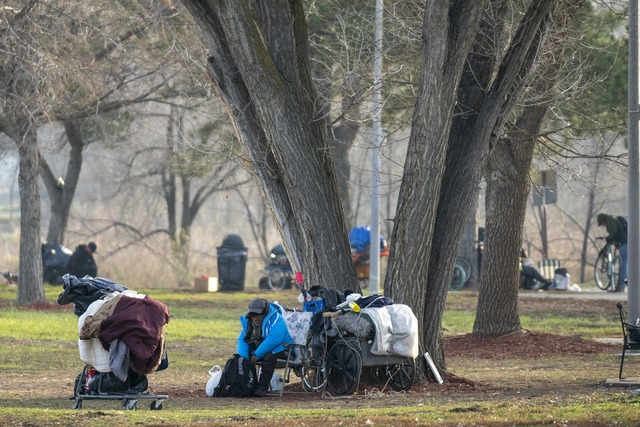
(Rick Egan | The Salt Lake Tribune) People gather on the lawn near the Jordan River, on Tuesday, Jan 13, 2026.
“Generally speaking, during daylight hours, I consider the concerns about safety to be a little overblown,” Jeff Whitbeck, who commutes to work along the river, said. “Though, I have had my fair share of interesting interactions along (the) trail.”
Another respondent, Jared Price from West Jordan, says he has run 5,000 miles along the Jordan River Parkway and has “never had a problem.”
“I have encountered a few angry raccoons, one ghost, and the occasional dirt bike, but no serious dangers,” Price added.
‘A major SLC attraction’
The consensus was fairly clear: people want “constant maintenance and improvement,” as Mike Olsen from Sandy wrote, including environmental cleanup, better trail maintenance, and development. But it doesn’t stop there.
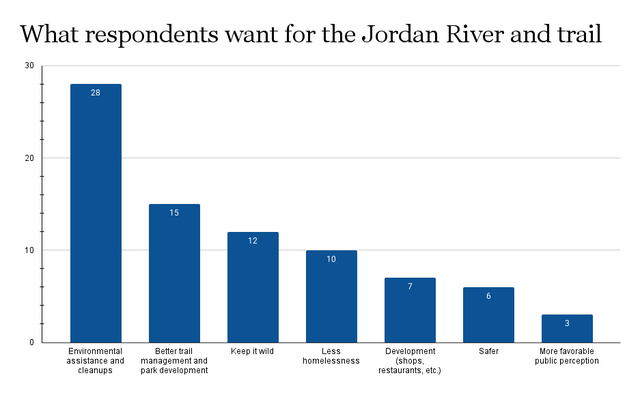
(Will Ruzanski | Great Salt Lake Collaborative) In a survey distributed by the Great Salt Lake Collaborative, respondents share their hopes for the Jordan River and Jordan River Trail)
Several respondents hope the Jordan River corridor “is restored as a community asset that is safe and accessible for everyone,” as Jason Wessel from Salt Lake City described. Another Salt Lake City respondent, Rob DeBirk, said he wants “a place where all socioeconomic statuses can mingle, more riparian areas and public space.”
Others noted development potential. David, who did not include his last name, said “I would like to see it become a major SLC attraction.”
“This could be a wonderful, peaceful place for recreation. Restaurants or coffee shops could be located near entrances and exits, making it a destination for families and friends. Let’s make the river an asset, rather than a blight,” Nancy Lombardo, a Jordan River kayaker from Salt Lake City, said.
“It is a precious asset, but most don’t see it that way,” Daniel Strong, who spends time at the International Peace Gardens, Lions Park, and Cottonwood Park, said. “I would love to see a Riverwalk-style area with dining and entertainment on the river.”
‘An urban oasis for recreation’
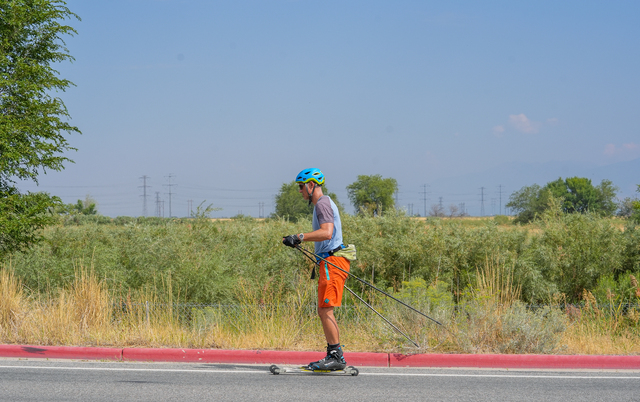
(Chris Samuels | The Salt Lake Tribune) Recreation near the Jordan River in North Salt Lake, Friday, Aug. 29, 2025.
While developmental potential was common among survey results, most respondents prioritized restoring natural space.
“Keep it wild, verdant, and open!” Shawn Williams of Riverton said. DeBirk described the area as “an urban oasis for recreation, relaxing, (and) birdwatching.”
“May it continue to be a great place for a walk in nature,” Joel Huff from Taylorsville added.
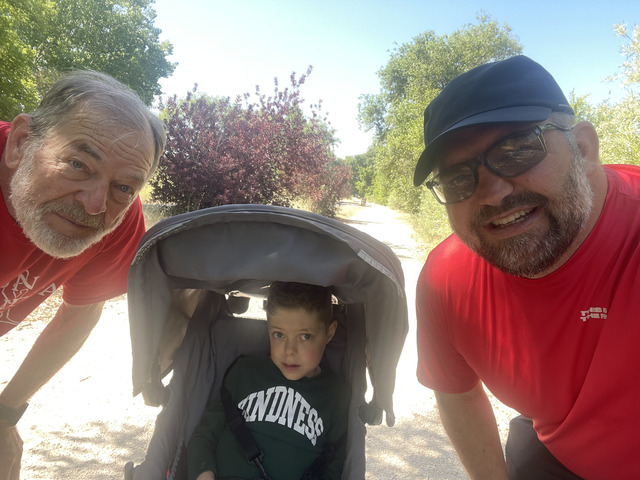
(Photo courtesy Joel Huff) Three generations of Huffs enjoying the Jordan River trail. From left, Stan, Theodore and Joel Huff.
It wasn’t all praise from the nature enthusiasts. Many acknowledged a need for improvement, citing environmental concerns and poor water quality.
Nicole Smeeding hopes for “clean water, healthy riparian vegetation, (and) wildlife.” John Peterson, who bikes along the trail weekly, wants “a healthy biosphere which is a clean, safe place to enjoy.”
‘I would never immerse myself in it’
We also asked people how they spend their time along the river:
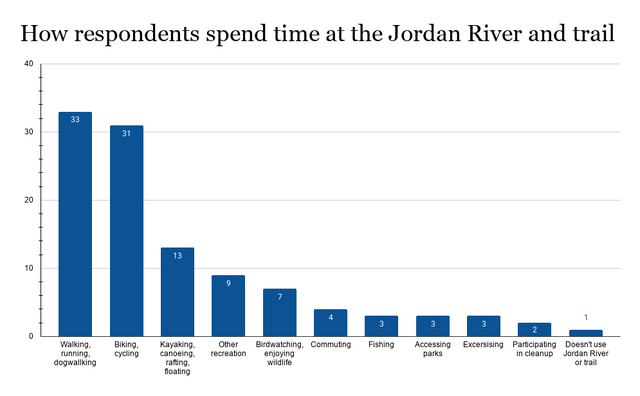
(Will Ruzanski | Great Salt Lake Collaborative) In a survey distributed by the Great Salt Lake Collaborative, respondents listed how they use the Jordan River or Jordan River Trail)
Most people who recreate on the river said they won’t touch the water, which can host harmful algae blooms and pollution from storm runoff in the surrounding urban areas.
“I wish I could enjoy paddleboarding on the river without the fear of getting the water on me,” Baile Turnbow from Salt Lake City wrote.
Monson said “I won't swim in it, but I'll kayak and I wish it was cleaner.”
One complaint about the water lingered: it “can be stinky,” as Parker Willett, who walks, bikes, and runs along the trail said.
“I can smell it when I am walking along the river,” Nicole Smeeding from Murray said. “Some times smell worse than others.”
“In the summer when the flows are low you can definitely smell the chlorine downstream of the wastewater treatment plants,” Christine Cline from Millcreek said.
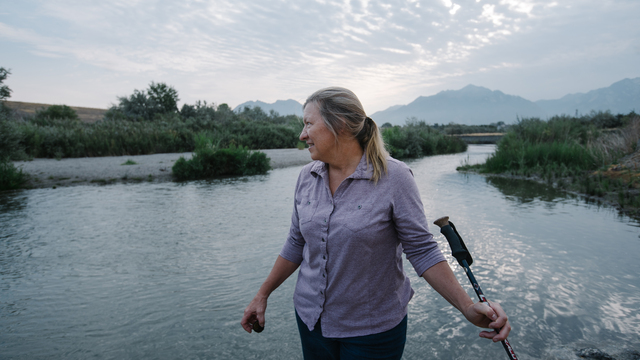
(Kelsie Moore, KUER) Chris Cline at the Big Bend restoration site along the Jordan River in 2018.
Regardless of the varying criticisms, compliments, and conflicting visions for the waterway, most respondents seem to share a common thought: the Jordan River has potential.
“I hope more people can see its utility,” Blue Herbst of Salt Lake City said. “The river isn't clean at the moment, but that's an opportunity for every person to not trash it, or other waterways in the Jordan River Basin. I hope to see more people volunteering to clean up and weed the areas around the Jordan River.”
Others, including Tim Brown, the president of Tracy Aviary, also have high hopes — and a vision for the future of the Jordan River.
“Part of the answer is surely [to] let the river be a river again,” he said. “A more natural river will lead to more positive use, which in turn will help with the safety of the space.”