Survey respondents say sustainable changes in water policy, more attention from lawmakers and policy with “teeth” are needed to save the lake.
Utahns want more water in the Great Salt Lake, and they want a plan that lasts. They’re worried about dust, development and decision-making by Utah’s government.
That’s what 509 Utahns said about the Great Salt Lake in a short answer, open response survey by the Great Salt Lake Collaborative.
As Gov. Spencer Cox pledges to restore Great Salt Lake to healthy levels by 2034 — and President Donald Trump’s $1 billion promise to “MAKE ‘THE LAKE’ GREAT AGAIN!” stalls in Congress — the collaborative wanted to know: How do Utahns feel about the Great Salt Lake?
“Without the GSL, there literally is no future for this region,” one respondent from Ogden said. “Collapse this lake, collapse this culture.”
“I would really like to see a shifting in state priorities away from industry and unmitigated growth and towards conservation,” A Salt Lake City survey respondent said. They want Utah’s government to “make the hard decisions that will actually have a lasting meaningful impact.”
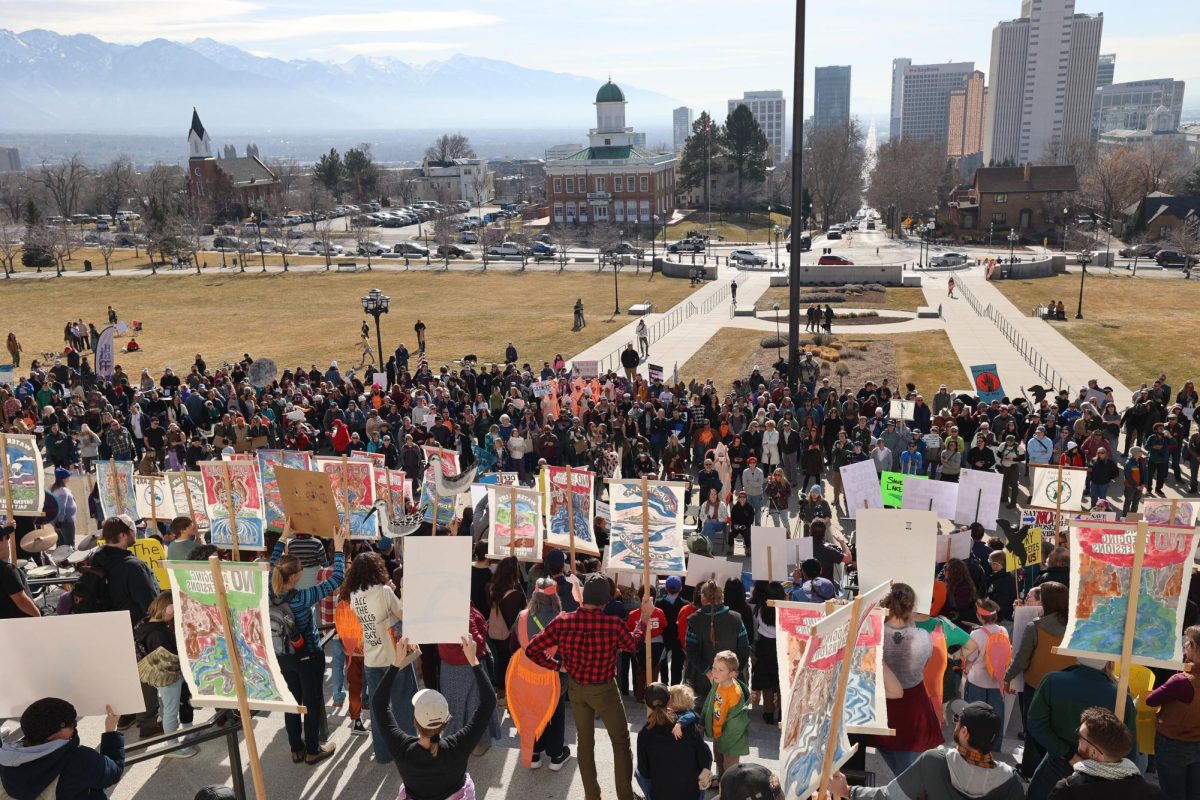
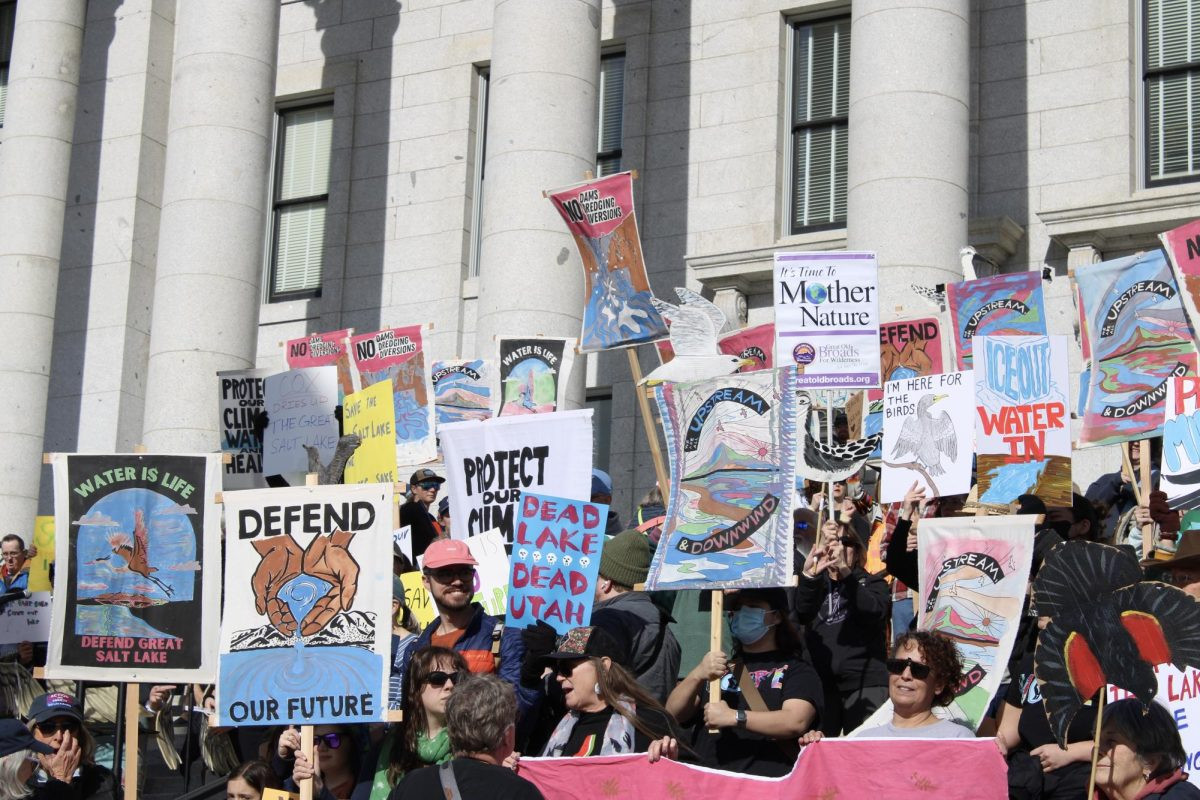
Protesters at the Save Our Great Salt Lake Rally gathered at the Utah State Capitol on Jan. 31, 2026 in downtown Salt Lake City. (Photo by Addy Cowley | The Daily Utah Chronicle) (University of Utah Student Media)
“I want more people to care and take action, but I feel powerless over its fate,” a Layton resident said.
While responses varied, a common theme was clear: most respondents want lake levels to rise, according to results, and they’re concerned about the public health consequences of its continued decline. But some worry others, including lawmakers and their fellow Utahns, aren’t taking the problem seriously enough.
Conserve water, raise the lake, keep it healthy
Water levels in the Great Salt Lake fell below 30% in October, exposing over 57% of the lakebed. Utahns want to see a change, and they want it to last.
“I would love for the lake to be restored to a healthy level,” one Saratoga Springs resident said. They want “long-lasting, permanent commitments and solutions to prioritize getting enough water back to the lake.”
A respondent from Taylorsville doesn’t think Great Salt Lake can “recover as long as we’re still diverting upstream sources away for other purposes!”
In September 2025, Cox signed the Great Salt Lake 2034 Charter, announcing $200 million in private commitments to aid the lake and a “shared effort across state partners, philanthropy, business, and the community,” according to the governor’s office. The goal: increase Great Salt Lake’s water levels to a “healthy range” by Utah’s 2034 Olympics.
A Salt Lake City resident who wants “sustainable methods” to raise water levels said “relying on temporary measures isn’t a win, the lake will drop again as soon as the Olympics are over, it’s no longer top of mind and public pressure has subsided.”
Some respondents were skeptical of expediting aid for the lake. “I’m concerned that this intense goal of raising the level of the lake by 2034 is going to empower expensive solutions like pipelines to carry more water into the lake without addressing the underlying problems that got us here in the first place,” a South Salt Lake resident said.
Others questioned the feasibility. “I’m not certain that Gov Cox’s goal can be reached. I hope he’s consulted environmentalists whose input led him to this goal,” a respondent from Orem said. Another from Draper said they think “the goal is unrealistic, [they] would like to see it restored to a level that does not generate toxic air pollution.”
Change from lawmakers and Utahns alike
On the state’s current trajectory — with continued development and the highest municipal water use in the region — most respondents expressed uncertainty about the lake’s future.
“My biggest fear [is] that our leaders in the state will just keep talking about the problem with the lake and saying that they are doing something, but won’t take steps or actions that will really save it,” one respondent from Magna said. “Politicians are really good about saying stuff, but not really good about following through with actions.”
A 2023 Utah State University report found only 14% of Utahns believe their elected officials are doing enough to address water scarcity in Utah.
“I would hope that every Utahn understands the severity of the potential crisis and is willing to do their part to conserve water,” a Salt Lake City resident said. “I would also hope that state leaders would better balance their desire for constant growth with the natural limits of our environment.”
A respondent from Box Elder County wants the lake to “become Utah’s biggest priority.” They want to “see it taken seriously as an existential threat and given every resource it needs.”
Many respondents expressed frustration with state leadership. A Salt Lake City respondent hopes Utah voters “will develop the backbone to stand up and elect officials who aren’t beholden to the idea of growth, regardless of the cost to the GSL.”
Another from Bountiful said “we need to apply indigenous wisdom and let tribes lead the way.”
Others were critical of calls to pray for change. “Praying for rain as a solution seems to be asking God to fix problems for us that we have created and we are entirely capable of solving,” someone from Salt Lake City said. “I never read anything in the Bible where it worked that way.”
Look to the sky
Three worries kept appearing side-by-side — and they all come from above: “toxic dust, lack of snowfall, migratory birds,” as one respondent from Ogden said.
Others, including a respondent from American Fork, are concerned about “the lake drying up, wildlife leaving, toxic dust, no more lake effect snow.” A Salt Lake City respondent said they’re worried about “toxic dust, warming climate, migratory birds, our identity as a state, our skiing industry.”
For many respondents, concerns about a shrinking lake aren’t a future risk — they’re already in the air. “We are already breathing the toxic dust from the exposed lakebed,” a Salt Lake City respondent said. “The environmental consequences will hit the poorest Utahns the most,” an Orem resident added.
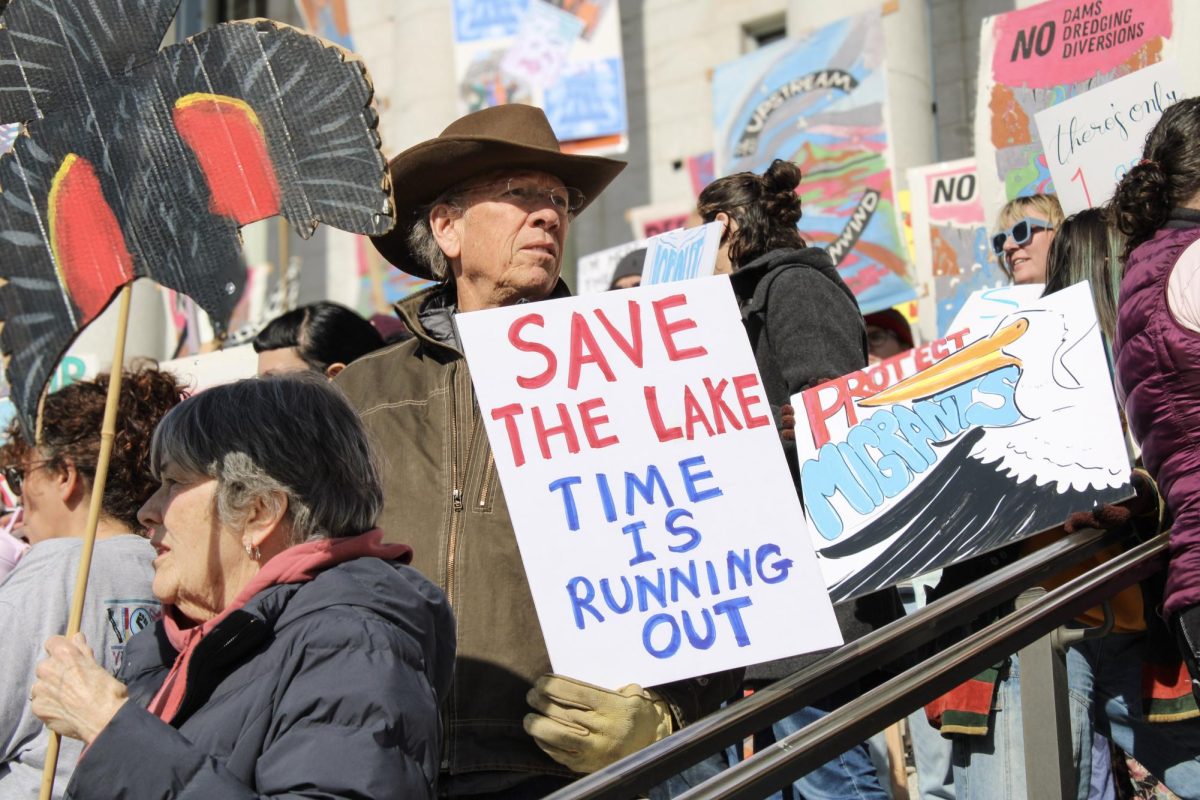 Protesters at the Save Our Great Salt Lake Rally gathered at the Utah State Capitol on Jan. 31, 2026 in downtown Salt Lake City. (Photo by Addy Cowley | The Daily Utah Chronicle) (Addy Cowley)
Research shows dust from Great Salt Lake’s exposed lakebed disproportionately affects residents on the west side of Salt Lake City, a historically poorer area.
The Great Salt Lake creates “lake effect snow,” which is when clouds pick up additional moisture up from the lake and dump more snow. Others were concerned about Utah’s skiing industry — namely what some describe as the greatest snow on Earth.
“I’m concerned if it dries up, so does the lake effect snow,” a South Jordan respondent said “Skiing would suck.”
Policy needs “teeth”
In order to raise water levels and keep Great Salt Lake within a healthier range, respondents want state leadership to implement new policy.
A respondent from Salt Lake County hopes for “comprehensive legislation that actually has ‘teeth’ to get more water to the lake.” A Logan resident wants “collaboration between all parties and a more nuanced way of understanding the lake’s health than just the depth.”
A different Salt Lake City respondent wants “to see climate solutions be the leading decision-making impetus in the legislature.” Another from Centerville wants “us to start to think differently about how we use our water and for cities and counties to start to think outside of the box for ways to educate and assist our communities in saving water.”
And with the governor’s 2034 goal years away, some say the actual deadline to save Great Salt Lake is much sooner.
“We won’t have to wait until 2034 to know whether this is working, the lake’s trajectory will be readable within the next two or three years,” a Salt Lake City respondent said. “The 2034 target and the governor’s Olympic commitment are political timelines, not hydrological ones. The lake will tell us the truth well before then.”
This article is published through the Great Salt Lake Collaborative with funding from Love the Lake, an initiative of the non-profit Great Salt Lake Alliance. Editorial decisions are made independently by the Collaborative and partner newsrooms. This story was written by Will Ruzanski for the Collaborative as part of a partnership between Amplify Utah and The Daily Utah Chronicle.