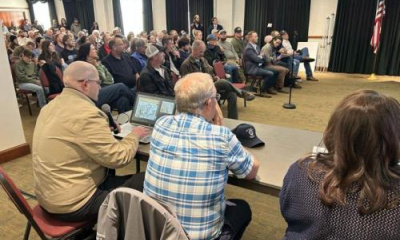
Tensions hung over the annual Colorado River conference in Las Vegas as states continue to dig their heels in over how to manage the troubled waterway.
Las Vegas • As Lake Powell sits at less than one-third full, federal leaders pressured states to reach consensus on the future management of the drought-stricken Colorado River this week.
“The time for grandstanding and rhetoric has passed,” Andrea Travnicek, assistant secretary for water and science for the Interior Department, said during the Colorado River Water Users Association conference on Wednesday. “The river will not wait for us.”
The urgent need for a deal and dire low water levels permeated the three-day conference. Utah and the six other states in the river basin have until Feb. 14 to craft a plan for how to manage the river after current guidelines expire at the end of 2026. That’s just under 60 days away.
The largest Colorado River conference of the year brought around 1,700 people, including federal officials, state leaders, tribes, water district managers, environmental groups and farmers, to Caesars Palace in Las Vegas this week to discuss the future of the dwindling river system that supplies water to 40 million people.
If the states fail to craft a plan, federal officials will step in, Scott Cameron, acting commissioner for the Bureau of Reclamation, told The Tribune.
Travnicek asked the crowd to give the states’ Colorado River commissioners room to negotiate and find a compromise. “If you can’t do that,” she added, “send us representatives that have the authority to best serve your interests but are willing to break through the barriers to get to the consensus deal.”
The seven state negotiators tried to convey optimism and commitment to reaching a deal. But tension among the Upper Basin — Utah, Colorado, New Mexico and Wyoming — and the Lower Basin — Arizona, California and Nevada — was palpable through occasional eye rolls and shakes of the head throughout the panel.
“We are still at the table,” said Gene Shawcroft, Utah’s Colorado River commissioner. “We’re working hard. We are committed to a seven state consensus agreement. And my opinion is progress is being made.”
A key sticking point between the Upper and Lower Basin is who should take cuts during low water years. The Lower Basin states have committed to an annual cut of 1.5 million acre feet, 20% of its allocation of the river. The three states have also made significant conservation efforts in recent years. Water use in California, the largest state in the basin with the biggest agricultural economy, was the lowest it has been since 1949, said JB Hamby, the state’s negotiator.
In years when more cuts are needed, the Lower Basin wants the Upper Basin states to commit to “verifiable and mandatory” water conservation, said Tom Buschatzke, Arizona’s negotiator. Any cuts needed above 1.5 million acre feet would be split equally between the Lower and Upper Basin, he added.
For Buschatzke to agree to a deal, he needs to get approval from the Arizona State Legislature. “I do not think there is anything on the table from the Upper Basin that would compel me to do that today,” he said.
Upper Basin states argue they already cut back their water use each year, though, based on actual flows in the river system upstream of Lake Powell.
“I think we’ve been pretty clear we are unwilling to require additional mandatory reductions on our water users,” Estevan López, New Mexico’s negotiator, said.
What’s at stake
The Colorado River supplies water to tribes, booming cities, farms and ecosystems across the U.S. Southwest and northern Mexico.
“This is not just about water,” Cameron said Wednesday. “As important as water is, it’s about people. It’s about agriculture, ecosystems, tribal nations, cities, industry, the economic futures of 40 million people. It’s about ensuring that future generations inherit a river system that is resilient, equitable and sustainable.”
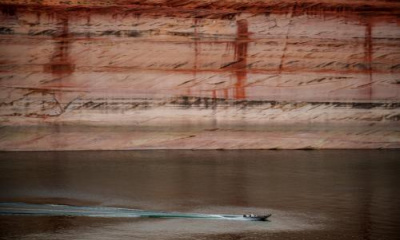
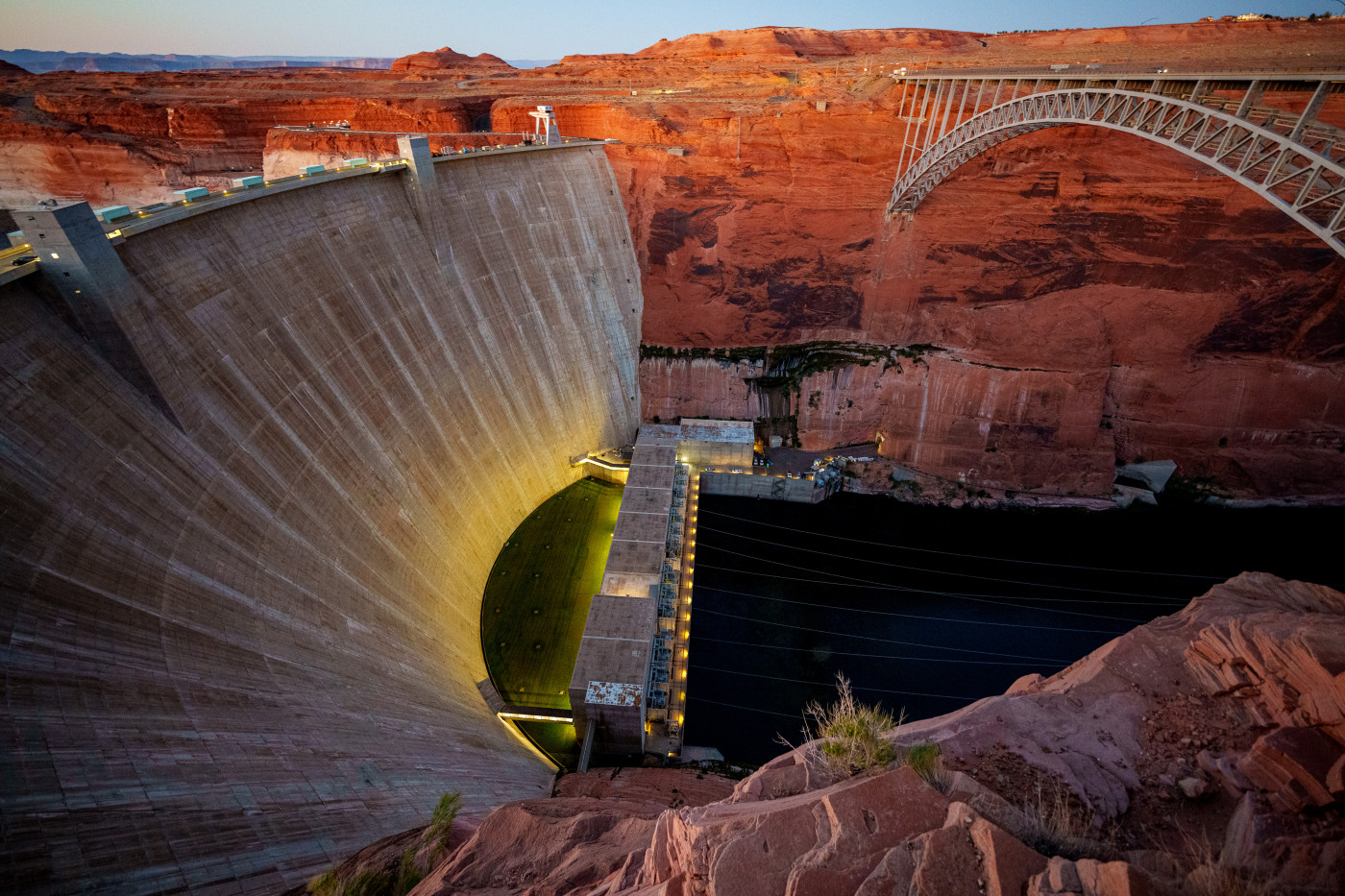
For over two decades, the Colorado River Basin has been in drought, and forecasts for next year show that Lake Powell could drop to dangerously low levels that affect infrastructure and electricity generation at Glen Canyon Dam.
“For many water users across the Upper Basin, this has led to a death of a thousand cuts over the last 20 years,” Becky Mitchell, Colorado’s lead negotiator, said on Thursday. “Many water users have had to make heartbreaking decisions. They’re on the front lines. They cull their herds, fallow their fields, lay off workers and go out of business even entirely. This is a precarious time.”
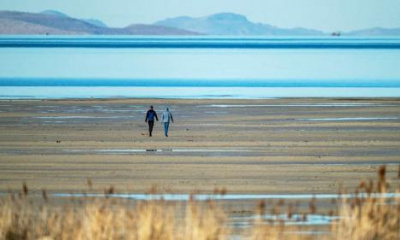
While Utah saw heavy rains in October — Salt Lake City experienced its wettest October on record — November went the opposite direction.
“We had grins on our faces until November came along, dry as a bone, 7.5 degrees above normal average temperatures,” Shawcroft said at a meeting of Upper Basin states on Tuesday. About 93% of the state is in moderate to extreme drought currently, he added.
Due to low water flows this year, Utah’s water engineer had to cut off water users, including some senior water rights holders, on tributaries to the Colorado River in eastern Utah this summer, Shawcroft added.
Trent and Eileen Potter were among those farmers and ranchers who saw their water cut back this summer. On some of their land, they were out of water by July 8, they said.
“That’s one of the frustrations that we see is that we’ve already been taking cuts just because of the hydrology of the area,” Trent Potter told The Tribune. “The water just isn’t available.”
The Potters have reduced their cow herd by 30% because of drought.
Tribes also hold senior and substantial water rights and have been in active conversation with federal and state officials about their priorities for a Colorado River deal. But representatives from the tribes also said there’s a need for more consultation and inclusion of tribes in decision making.
“It’s my hope that one day tribes will also have a seat at this table on the commission, not just the states,” Mike Natchees, vice chairman of the Ute Indian Tribe, said Tuesday.
Not all tribes in the basin have secured their water rights, and many don’t have infrastructure to develop and use all their water. Natchees said it’s time for tribes to “flex their sovereignty” and begin withholding some of their water that currently flows downstream to other users. “We are uncompensated for it. It is undeveloped. … That is unacceptable for the Ute Indian Tribe,” he said.
What’s next
The Interior Department will release a draft environmental impact statement for post-2026 guidelines at the end of this month or early January, Travnicek said.
That document will lay out alternatives for how to manage the river after 2026, but Cameron said the agency still wants the states to bring a consensus agreement forward.
“We’ll essentially take a seven state deal, and we’ll parachute it into the [environmental impact statement] as the preferred alternative,” Cameron told The Tribune.
While the previous interim guidelines for the river lasted 20 years, it’s more likely states will reach a shorter term agreement this time around.
“I went into this process … advocating strenuously for a 20 to 30 year deal — a robust, durable, multi-decadal deal, to give certainty to things,” said John Entsminger, Nevada’s negotiator. “I no longer think that’s possible, with the time we have left, with the hydrology that we’re facing, I think the best possible outcome at this juncture is probably a five year operating plan.”
If the states fail to reach a consensus by Feb. 14, the federal government will act.
“If the states don’t reach a deal, then we will come up with a preferred alternative that fits within the bounds of all the alternatives that are floated as part of the draft,” Cameron told The Tribune.
The public will have the opportunity to comment on the alternatives. The Secretary will likely make a decision by June or July and Congress may also have to ratify the final deal, Cameron said. All of that needs to be complete by Oct. 1, when the next water year starts on Lake Powell.
“The time to act is now,” Cameron said.