
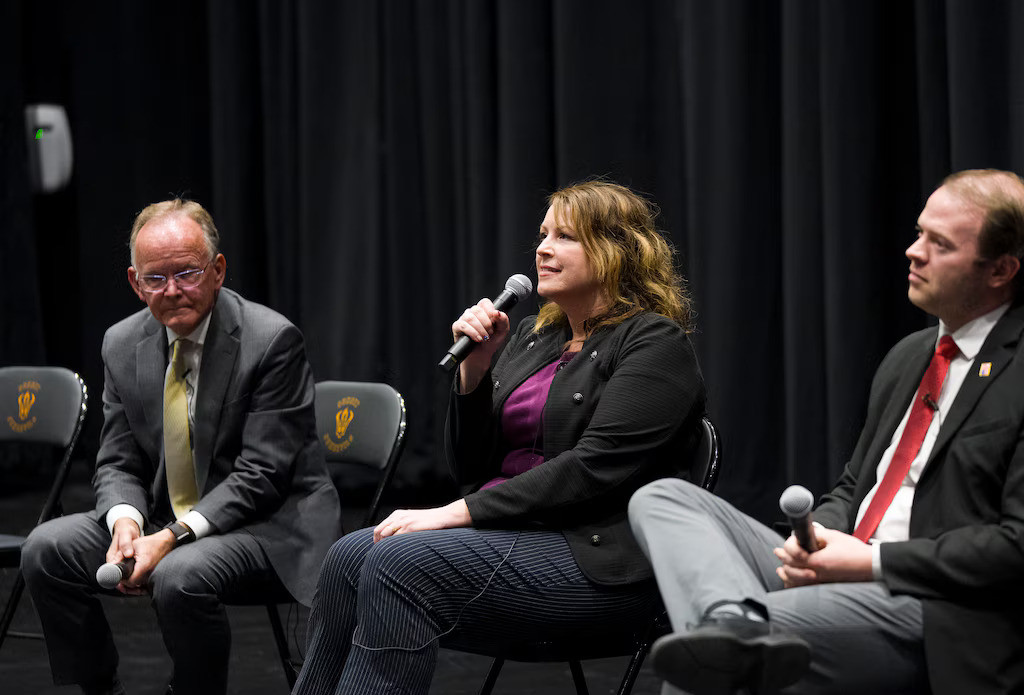
Stephanie Hollist and Braden Hess, who are both challenging J. Stuart Adams in the Senate District 7 primary, have different views on how to change MIDA.
This article is published through the Great Salt Lake Collaborative with funding from Love the Lake, an initiative of the non-profit Great Salt Lake Alliance. Editorial decisions are made independently by the Collaborative and partner newsrooms.
Sunset • Two Republicans challenging Utah’s top lawmaker in this year’s primary election want to see major changes to – or the complete elimination of – a state development board the lawmaker has helped guide for more than a decade.
Stephanie Hollist said Utah’s Military Installation Development Authority is an example of how the state has lost its balance of power, and Braden Hess doesn’t believe it should exist.
J. Stuart Adams — who, along with being the Senate president, chairs the powerful development authority — has come under fire after the board greenlit a hyperscale data center campus planned for Box Elder County.
Outrage against the data center has turned into a key issue in Adams’ reelection bid in the Layton-area Senate District 7 primary.
In late April, MIDA approved a series of resolutions to move the multibillion-dollar data center project forward, agreeing to move fast and charge far lower taxes than usual to help celebrity investor Kevin O’Leary “lure the hyperscalers” to Utah. Then, in early May, Box Elder County commissioners unanimously voted to allow MIDA to create the data center project area.
Their swift action, along with concerns over what the project could mean for the environment and the already stressed ecosystem around the Great Salt Lake, has drawn vast criticism from across the state.
Brenna Williams, a lead organizer behind a local effort to overturn the county’s decision to move forward with the data center, shared the anger she’s heard from the community during a panel discussion on the data center Tuesday night. All three GOP candidates attended the panel.
The community is angry about the tax breaks O’Leary received, and about the “existential threat to our desert community” and about MIDA itself, she said.
“More than anything, they are angry because they feel powerless,” Williams said. “They feel that their elected leaders have betrayed their trust and their interests.”
‘Fox guarding the hen house’
Hollist told the crowd Tuesday she’s challenging Adams because of that exact feeling, and “hearing from so many people about how they did not feel like their voices were being heard in our government.”
She described MIDA as being like “the fox guarding the hen house” because two board members serve in the Legislature — the same state body that created and makes the rules for the development authority.
That’s the same argument made in a lawsuit challenging MIDA’s constitutionality.
During the panel, Adams defended MIDA, saying there’s a lot of misunderstanding around what it is and that it was necessary to help save Hill Air Force Base and handle planning in an area that spans multiple government jurisdictions.
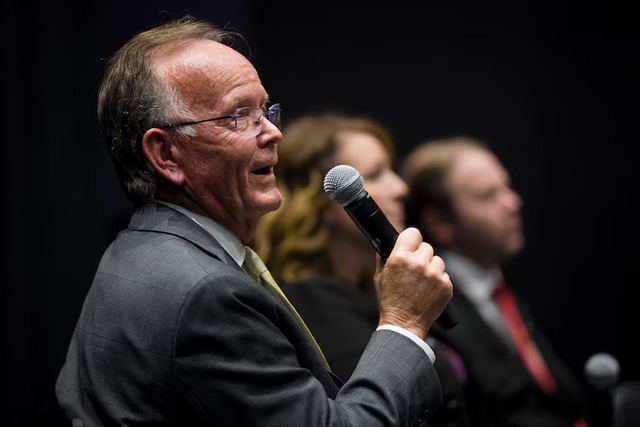
(Bethany Baker | The Salt Lake Tribune) Senate President J. Stuart Adams, R-Layton, defended the Utah Military Installation Development Authority during a candidate town hall hosted Tuesday, June 16, 2026, in Sunset by Grow the Flow.
Protecting Hill is important, Hollist said, but said she doesn’t understand how MIDA evolved from that to what it is today.
“There’s cleanup that needs to happen with this entity,” she said.
Hess wants to see it and similar “extra-governmental entities” gone.
“I believe in federal government, state governments, local governments, not in any other sort of capacity of government,” Hess said.
‘The people spoke’
While Adams’ opponents described the data center as evidence of lawmakers not listening to their constituents and hinted it’s an example of them falling short, he argued he has responded to concerns.
He talked about a letter he sent to O’Leary at the start of the month, demanding a reduction in the size of the project, safeguards for the environment and better transparency. In that letter, Adams cited “public feedback and further review” as the reason for his call to scale back the project.
“The people spoke. They said, ‘We need clarity,’” he said Tuesday night – and now they’ll be getting a public website with information on the project.
O’Leary responded a few days later, agreeing to remove a little more than 20,000 acres from the project area and have the data center campus itself cover less than half that remaining space.
But without a publicly available plan for the data center, the impacts of Adams’ letter remain unseen.