Bills aim to help conserve water in a year kicking off with drought and dismal snowpack
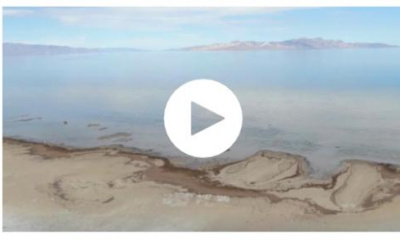
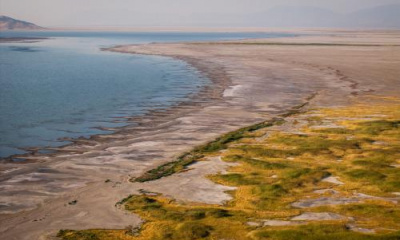
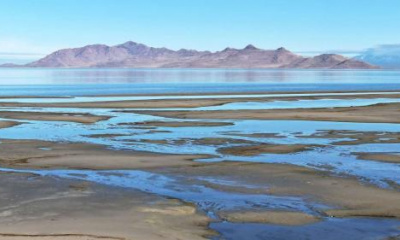
Mountains without snow. A start to February that feels like April. The Great Salt Lake so dry, scientists warn of “serious adverse effects” on people, wildlife and the landscape.
Taking it all into account, it’s hard for Joe Martindale of Kearns not to feel a little on edge.
“I’m hopeful, but more on the anxious side,” said Martindale, 18, who’s among the high school and college students demanding lawmakers take big steps this year to save the lake.
“We need real, tangible action,” added Autumn Featherstone, 20.
State lawmakers say they feel the urgency, too.
“We have a moment in time where we can get it right,” said Rep. Jill Koford, R-Ogden. “Great Salt Lake is the single most important issue I think we’re facing as a state.”
Koford is sponsoring a proposal to remove red tape for farmers making deals with the state to conserve water. She said the bill would make it more attractive and faster for them to sign up to get paid for leaving some of their fields dry and unplanted for a time. And she’s behind another bill designed to help better track where exactly that water flows.
“It’s a start, and it’s an important start,” Koford said. Agriculture uses the most water diverted from the lake — 65% — according to the Utah Division of Water Resources.
Another bill under consideration would bar companies from using sprinklers on grass that is planted mainly for looks, rather than use. It would apply to new developments in northern and western Utah’s Great Salt Lake basin such as apartment buildings, but not schools, farms and houses.
All three proposals sailed through their first test at the Legislature, advancing from House committees and to the full House of Representatives. Still more bills await a public hearing at the Capitol.
The state didn’t wait to make a different move cheered by Gov. Spencer Cox and conservationists. It bought an out-of-commission Magnesium plant on the southwest shores that state leaders say comes with a significant amount of water they can now make sure stays in the lake.
Cox set an ambitious goal to get the lake back in top shape for the 2034 Winter Olympics in Salt Lake City. But in the meantime, lawmakers’ inboxes are filling with emails from voters about its poor health and the ripple effects on their families, birds and the future of the state, said Senate Minority Leader Luz Escamilla.
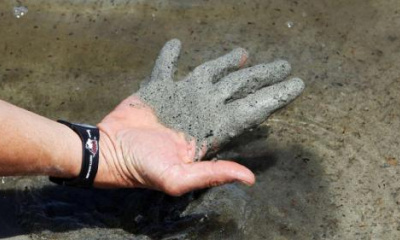
Dust from the toxic lakebed and its effects on public health need to be “at the forefront of everything we do and say,” she recently told reporters. Utah poured $1 million into a dust monitoring program last year to capture dust particles and analyze them. The move followed other investments in recent years, including the creation of a trust in 2023 that began with $40 million in public funding.
“The reality is, if the Great Salt Lake continues to deplete at this level, we can’t even be here,” said Escamilla, D-Salt Lake City.
Drought and climate change are making matters worse. On Feb. 1, Utah hit a record low for snowpack, which melts in spring and summer to fill rivers and reservoirs, providing 95% of the state’s water.
Martindale, a student at Kearns High School, and Featherstone, who attends the University of Utah, said the time for incremental steps has passed. Featherstone noted a version of the bill restricting sprinkler use on ornamental grass failed to pass last year.
“I think it’s frustrating when even the lowest hanging fruit doesn’t get taken up,” she said.
The students point out that by some estimates, restoration of the lake will take billions of dollars. With that in mind, they want lawmakers to embrace a longshot bill they helped to craft that would set aside $200 million in public money for the cause.
Young Utahns played a “real role” in shaping the proposal that would reroute money from a Bear River development project to the lake, Sen. Nate Blouin, D-Millcreek, told colleagues on the Senate Natural Resources, Agriculture, and Environment Committee Monday.
High school and college students urged the committee to pass it, but the measure stalled. The panel decided not to vote on it, saying it needed more work and input from the office of the Great Salt Lake commissioner.
Away from the Capitol, Featherstone and Martindale said they grew up witnesses to the tragedy of the lake’s decline. Now they are trying to fathom that they may be watching its last act.
“Any time we’re talking about anything far off in the future — say, establishing a career or maybe having kids — it’s like, ‘Oh yeah, but the drying Great Salt Lake. I can’t be here,’” Featherstone said. “People aren’t trusting that they can have a future in this state.”
Other bills to watch this session on water conservation and the Great Salt Lake:
- HB296: Allows water suppliers to include the Great Salt Lake in their conservation plans
- HB155: Sets up tiered water rates to persuade Utahns to knock off “excessive” lawn watering
- HB76: Requires data centers to report to the state how much water they use
- SB130: Pitches in $2 million for grants to maintain the Jordan River and remove invasive weeds
- HB247: Reroutes revenue from a brine shrimp tax to an account meant to benefit the lake